

2026 Portuguese (K)C-390M program on the move
- Ludo Mennes

- 5 hours ago
- 10 min read
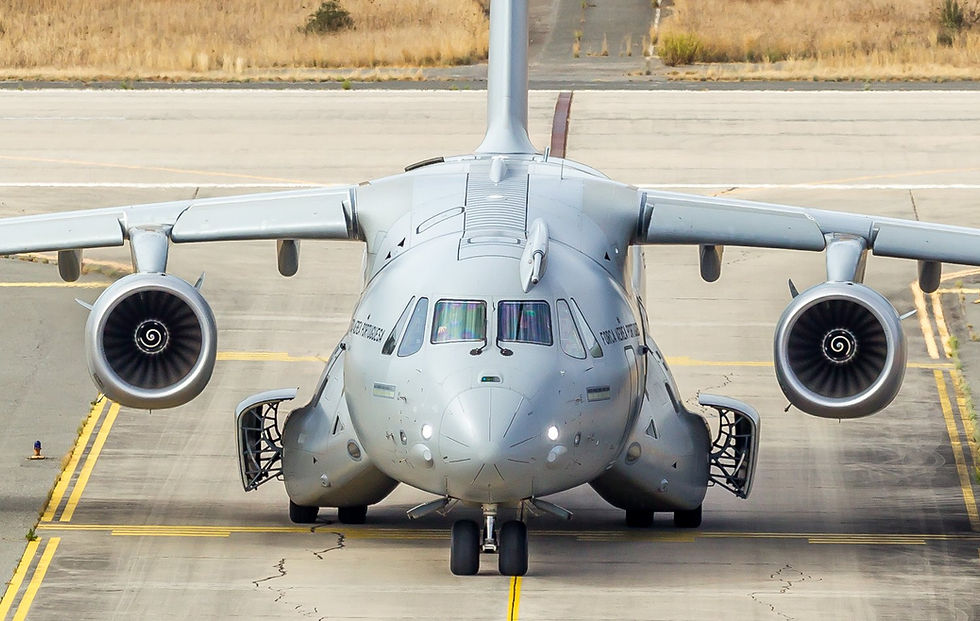
“What do you get when you multiply the C-130 by three? The (K)C-390 Millennium; an aircraft which can fly further, faster and fuller (more payload)!” This joke, shared amongst pilots, clearly shows that the Brazilian aerospace manufacturer Embraer has successfully developed a multi-mission transport aircraft, which is increasingly making its mark on the worldwide defense industry.
With the Portuguese Air Force (PRTAF) receiving its fourth (K)C-390 Millennium by the beginning of 2026, their implementation program is reaching maturity.

History
In July 2017, the Portuguese government authorized the purchase of five (K)C-390 Millennium aircraft to supplement/replace the old C-130H/H-30 Hercules transport aircraft. The PRTAF placed an order with Embraer two years later for five airframes with a possible option for a sixth, a flight simulator and logistical support, in a contract worth €827 million.
As Portugal has been involved in the (K)C-390 program from a very early stage and has become the first partner since 2017, the ties between the manufacturer Embraer and Portugal have been strong ever since. For example some of the aircraft parts, including the aircraft’s central fuselage, are being produced in Portugal, by the Portuguese subsidiary OGMA and in factories in Evora. Both OGMA, Embraer and the FPRTAF have worked closely together to make sure that the (K)C-390 Millenium met the requirements set by both the aeronautical authority of Portugal and NATO standards.
The first (K)C-390 Millennium transport aircraft (designation K for the tanker version), started the NATO campaign on May 20, 2023, flying certification tests from Beja, before returning to Brazil to complete the final tests before handover. The aircraft was officially delivered and entered service with the PRTAF, during a ceremony held on October 16, 2023, at the Embraer plant in Gavião Peixoto, Brazil. This milestone made Portugal the first operator outside Brazil. The aircraft are operated by Esquadra 506 (506 Squadron) ‘Rinocerontes (Rhinoceros)’ from Beja.




On September 17, 2025 the Chief of Staff of the PRTAF, General João Cartaxo Alves, signed the amendment to the current contract with Embraer to acquire the sixth airframe and the inclusion option of ten new aircraft for potential acquisitions by future partner nations. By indirectly increasing the current fleet, the (K)C-390 training center in Beja will further reinforce as the specialized training center for the (K)C-390 Millenium.
C-390 Millennium
The Brazilian aerospace manufacturer Embraer began its development of the C-390 Millenium in the mid 2000s with the support of the Brazilian Government and Air Force. Early conceptual designs were based on their commercial E190 aircraft. In May 2008 the government invested USD 440 million in the program and issued a USD 1.5 billion contract in 2009 for two prototypes. The first prototype flew on February 3, 2015, and the first production aircraft was delivered to the Brazilian Air Force on Sept 4, 2019. During the Dubai air show in November 2019 Embraer announced the aircraft’s name for the global market, C-390 Millennium. First foreign customer for the new aircraft was Portugal, acquiring five plus one airframes.

The C-390 Millennium, equipped with two Pratt and Whitney V2500-E5 engines, is capable of lifting 26 tons of payload, flying at a speed of 470 knots up to 2,700 kms (with a payload of 23 tons). The aircraft is capable of performing a wide range of missions such as transporting, cargo and troops dropping, medevac, SAR and firefighting. Furthermore, the aircraft can be configured with air-to-air refueling equipment (hose-and-drogue-pods).
The C-390M has since been acquired by Hungary, South Korea, the Czech Republic, The Netherlands, Lithuania, Austria and recently Sweden, with possibly more users to come.
Implementation program
Involved from almost the very start of the Portuguese Air Force (K)C-390 program, is Colonel Paulo Martins. A highly experienced transport pilot having operated the C-212 Aviocar, CN295 and C-130 Hercules in the PRTAF and E-3 AWACS for NATO. Col. Martins became part of the implementation team in 2015, being responsible as pilot in charge for the analysis of the operational requirements for the (K)C-390 and the implementation of the aircraft within the PRTAF. He explained: “When I started back in 2015 we were still discussing the requirements with Embraer at the time. It was basically only ideas on paper, there were no aircraft yet. Once we bought the aircraft, I was part of the first group of Portuguese pilots to receive flight training by Embraer in Brazil, since I have accumulated around 400 hours on the (K)C-390.”





Currently Col. Martins is the operational coordinator within the (K)C-390 project team consisting of financial, logistical and operational sub teams. He continued: “I basically know all the requirements and capabilities of the aircraft, my role is to pass this knowledge to the 506 Squadron at Beja. To help them and tell them how to implement the aircraft in a way that it was designed for. At the same time the loop goes the other way around, as I provide Embraer with valuable feedback from the users for improvements, adjustments and corrections. The engineering team of Embraer and the PRTAF work closely together to make the aircraft a better airplane.”
Both entities are very open to feedback to realize improvements. The main focus of this cooperation is to adapt the operations to the Portuguese Standard Operating Procedures (SOP) and Tactics, Techniques and Procedures (TTP), which improve the operational deployment of the aircraft.
As the number of user countries is growing, Embraer is working on the idea of a user group approach. However, the NATO environment is different to the environment in Brazil, therefore the idea has not yet come to maturity, but could blossom in the near future.
Feedback loop
One of the most important sources for improvement feedback comes from the 506 Squadron as the squadron currently operates three airframes intensively.
For the valuable feedback Col. Martins has a number of key players within the squadron that are part of his operational team. They are, what he calls, his “eyes and arms in the squadron”. Almost on a daily/weekly basis he receives feedback from the team on how the aircraft operates in regard to the program demands and mission set. Anything that needs attention is being reported.

One of the key players is the 506 Squadron commander, LtCol. Miguel Pousa. He elaborated: “Since the arrival of the first aircraft in 2023 the squadron has been operationally responsible. Our main objective is to comply with the mission set. We are currently testing the (K)C-390 for different mission types, where we learn on a daily basis. By flying the aircraft intensively, the knowledge grows exponentially. My job is to support the program with necessary data and specific details when we encounter problems, either on request from the operational team in Lisbon, or when we encounter the problems ourselves during a flight. For example, with the radar, we brief them on the details like where we encounter possible problems, during which missions etc. The data is than send forward to Embraer in Brazil.”
The bond between Embraer and the PRTAF is also very close on maintenance level as people from Embraer are supporting the operations at Beja. The PRTAF is capable to perform Level 1 and Level 2 maintenance on the aircraft at B1 (airframe and powerplant systems) and B2 (avionics and electrical systems) level, for larger issues Embraer will support.



The bond between the Brazilian Air Force and the PRTAF is equally good. When needed, both airforces have contact to share operational situations and issues without any limitations, as LtCol. Pousa explained: ““The greater objective for the both of us is to make a better aircraft for future users”. However, both airforces do not train and operate together as the theatres of operation are too different. Mainly during the start of the KC-390M operations the Brazilian Air Force has been supporting the qualifications of the Portuguese pilots, engineers and maintainers.



Squadron operations
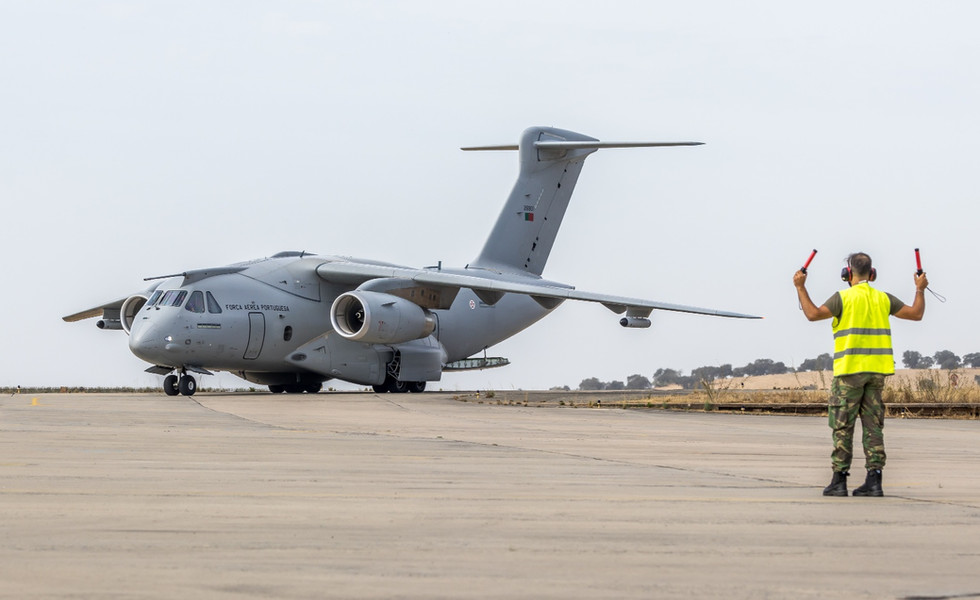
With three aircraft received and the fourth arriving at beginning of 2026 these are busy times at 506 Squadron. The serviceability of the aircraft is high, the number of flight hours is growing rapidly. At the moment the squadron has 11 pilots, of which four captains and seven co-pilots, and nine loadmasters current of which half the crews are also tactically trained. However, the required number of crews to operate five aircraft is 25 pilots and 18 loadmasters. Like any unit in the PRTAF finding new personnel is a challenge. LtCol. Pousa explained: “Finding new pilots is difficult. All squadrons need people, but it is difficult to find new people willing to serve in our Armed Forces. Gladly we recently welcomed two new young pilots coming straight from the Academy and advanced flight training on the Epsilon. They will start their ground school and simulator course in Brazil soon, but will finish their flight training here at the squadron, which makes it a first for us!”

With a new generation of pilots joining the mindset change from the legacy C-130H to the new aircraft is easier to make. One of the most important lessons learned is that operating the new aircraft requires a different mindset, mentality, modus operandus and doctrine that have to be implemented within the squadron.
Regarding the mission set, 506 Squadron is currently in the Initial Operational Capability (IOC) Plus phase working its way up to the Full Operational Capability (FOC) in 2027. He continued: “For air tactical transport (dropping of cargo and troops, tactical assault landings etc.) we are still improving and not yet fully operational. We are constantly learning and improving and still testing for example the electronic warfare equipment. We expect to start doing landings on dirt strips by the end of 2025 or beginning of 2026.”
The aircraft have the capabilities for firefighting, SAR and medevac operations, however, these types of missions are currently not part of the Portuguese mission set. The air-to-air refueling capability to act as tanker and receiver is a new doctrine to the PRTAF. The qualifications will start by the end of 2026. Currently the PRTAF is in the process of studying how to realise the qualifications and planning of the road ahead. The qualification course for refueling will be done in Brazil, however the TTP’s will afterwards be adapted to comply with NATO standards.

Portuguese – Dutch cooperation
To increase tactical experience LtCol. Pousa is looking with one eye to the Weapons Instructor Course (WIC) organized by the Royal Netherlands Air Force (RNLAF) on a bi-yearly basis. Within NATO the F-16 community worked closely together in the so called European Participating Air Forces (EPAF) consortium sharing experiences, training and tactics. As the RNLAF decided to buy the C-390M and both airforces are closely working together, sharing tactical experience would be a next logical step.
LtCol. Pousa elaborated: “The next WIC will be held in 2026, which comes too early for us, the edition thereafter would better work. As we are only two years into the program, we have to be careful and gain the tactical experience step by step. At the moment we have no pilot in the squadron that has ever done a tactical exercise on the (K)C-390, so a controlled build up is essential.”
Although the first RNLAF aircraft are relatively far from delivering (end of 2027), the RNLAF has been present in Portugal for almost a year with a small team of pilots and loadmasters to be at the top of the speer to learn and develop their introduction program at the same time.
The first Dutch aircrews, both pilots and loadmasters, already started their qualification training. Col. Martins is positive about the cooperation between the two nations, he explained: “ The partnership is good and our joined efforts will strengthen the ties for future operations. They need us now for the knowledge to operate the aircraft, but in the future we can learn from their enormous experience in tactical air transport.” LtCol. Pousa added: “Starting something new, with different countries working on the same product is amazing, because we have different experiences we bring to the table. From the beginning since they are in Portugal and fly with us, we try to share everything about our situations and experience on the aircraft. We also share our syllabi for the qualifications and tactical manuals, so we can improve them as the Dutch have a lot of experience. It is like a symbiose, where we are trying to help each other and make both stronger!”


Future plans
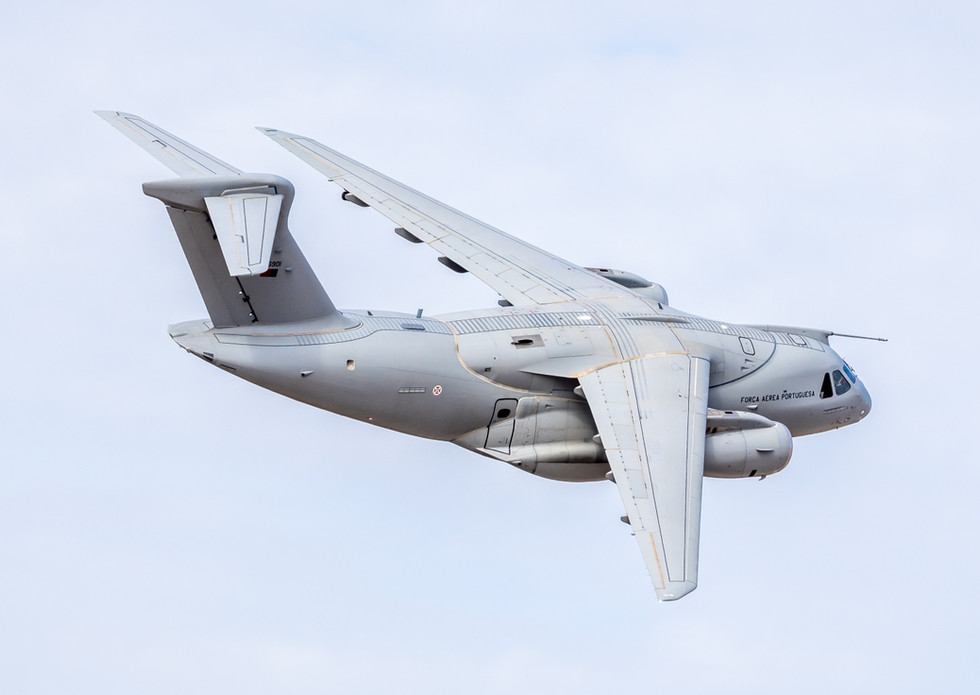
With the growing number of countries operating the (K)C-390, the PRTAF has a strong card on the table for a multi-national training centre at Beja airbase. Beside the favourable weather conditions and sufficient airspace to operate, the facilities to host are all in place. The initial idea of a training centre with Full Flight and Mission Simulator (FFMS) capacity was already planned when the (K)C-390 was bought in 2019. Col. Martins explained: “We believed that by being in the front would help us to set the standard for newcomers. Every nation that starts operating the (K)C-390 in the future is more than welcome to join. We recently have rebranded the training centre as the “(K)C-390 Training Centre of Excellence” and are working closely with Embraer to pull the strings together. There will be no operators other than Portugal, Hungary and Brazil for the near future yet, as the new aircraft will be delivered from 2026 onwards, so I expect 2027 to be the year of decisions.”
Recently the Portuguese MoD announced the acquisition of a second FFMS, already anticipating on the possible aircrews, who need to be trained in the future. One of the possibilities with different NATO partner joining, could be multiple training facilities spread over Europe. For example Beja, Portugal for the initial and advanced training of the aircrews, Austria for mountain flying, Sweden for arctic (snow and cold) operations. Still no concrete plans have been made, as Col. Martins stated “we do not have a clear vision yet. However, the main objective here is not to lose the opportunity of cooperation between NATO partners”.
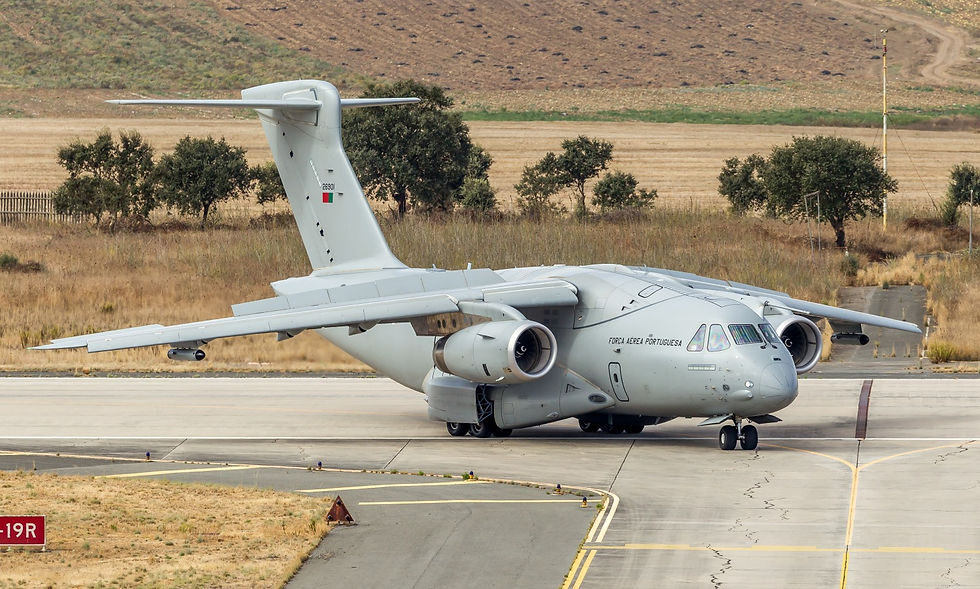
No matter what the future will bring in regards to partnering, both men are very positive about the recent developments. The hard work of all involved, both at staff and at squadron level, creates a lot of energy and pride, which money cannot buy. Col. Martins concluded: “The (K)C-390 was generated in a new millennium, that cannot be looked upon and operated in the same way as we look to and operate the legacy aircraft. The mindset, the threats, the weapons, everything has changed. Our biggest challenge is to operate this new aircraft in a different way, learn the aircraft, its capabilities and look to the future how to employ it with an open mindset. The (K)C-390 Millennium is a truly game changer to be!”

Northern Skies Aviation would like to thank the Portuguese Airforce Public Affairs and the people at 506 Squadron for their help and hospitality during our visit to Beja Airbase.


Comments